Which Roof Is Older
Knowing the age and type of each section tells us which membrane or panel the repair has to bond to.
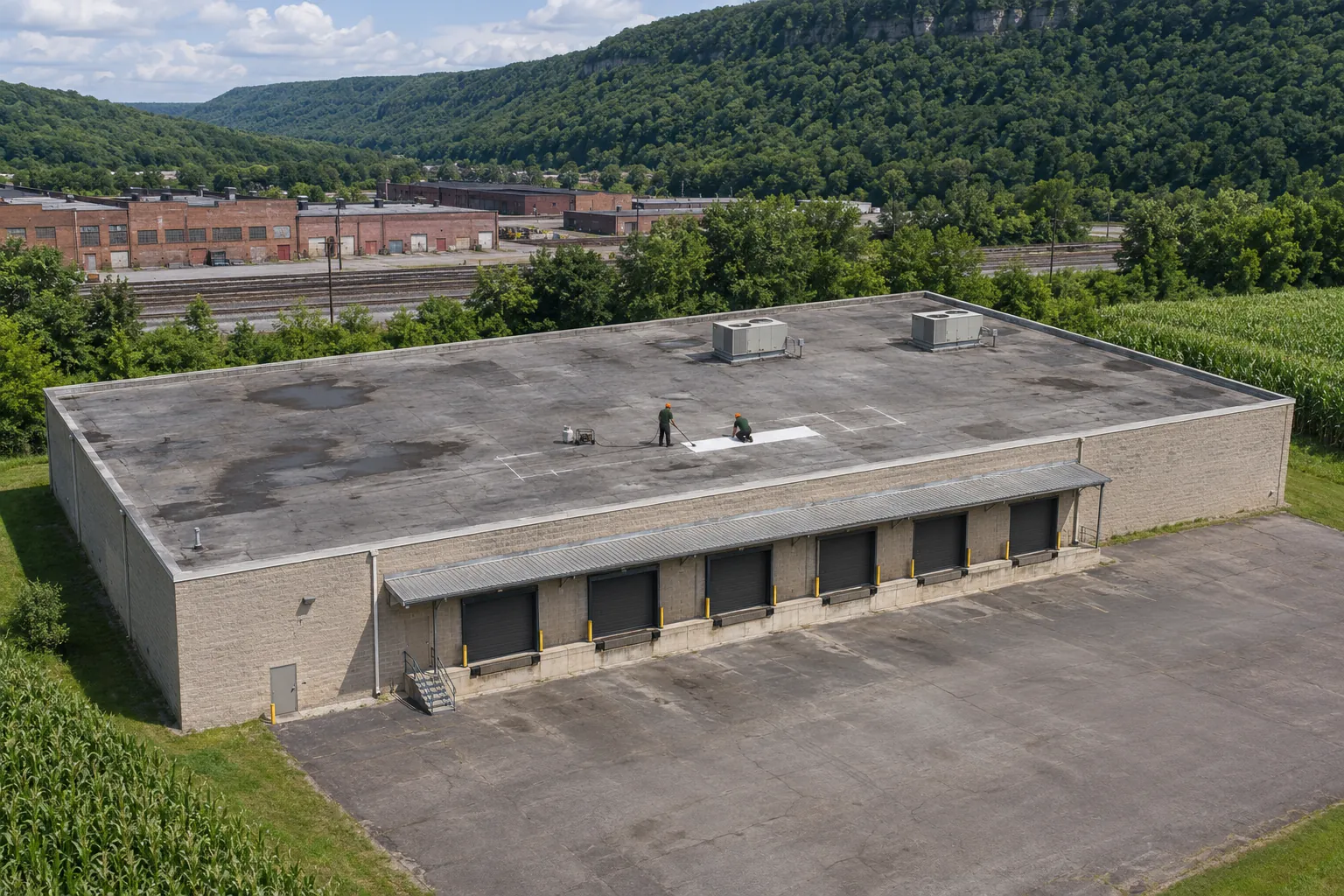
As a Johnstown commercial roof repair contractor, we repair shop and warehouse roofs, including the leaks that start where a newer addition meets an older roof.
Johnstown commercial roof repair often means fixing the joint between two roof sections, since many buildings here grew in stages.
Our work on these buildings often starts at a height change. One side might carry a newer membrane or metal roof, the other an older system, and the flashing that joins them has to move with both.
We check the step, the drainage on each side, and any earlier flashing work to find the entry path. The repair can reach into either section, so the age line of the roof never decides where the work stops.
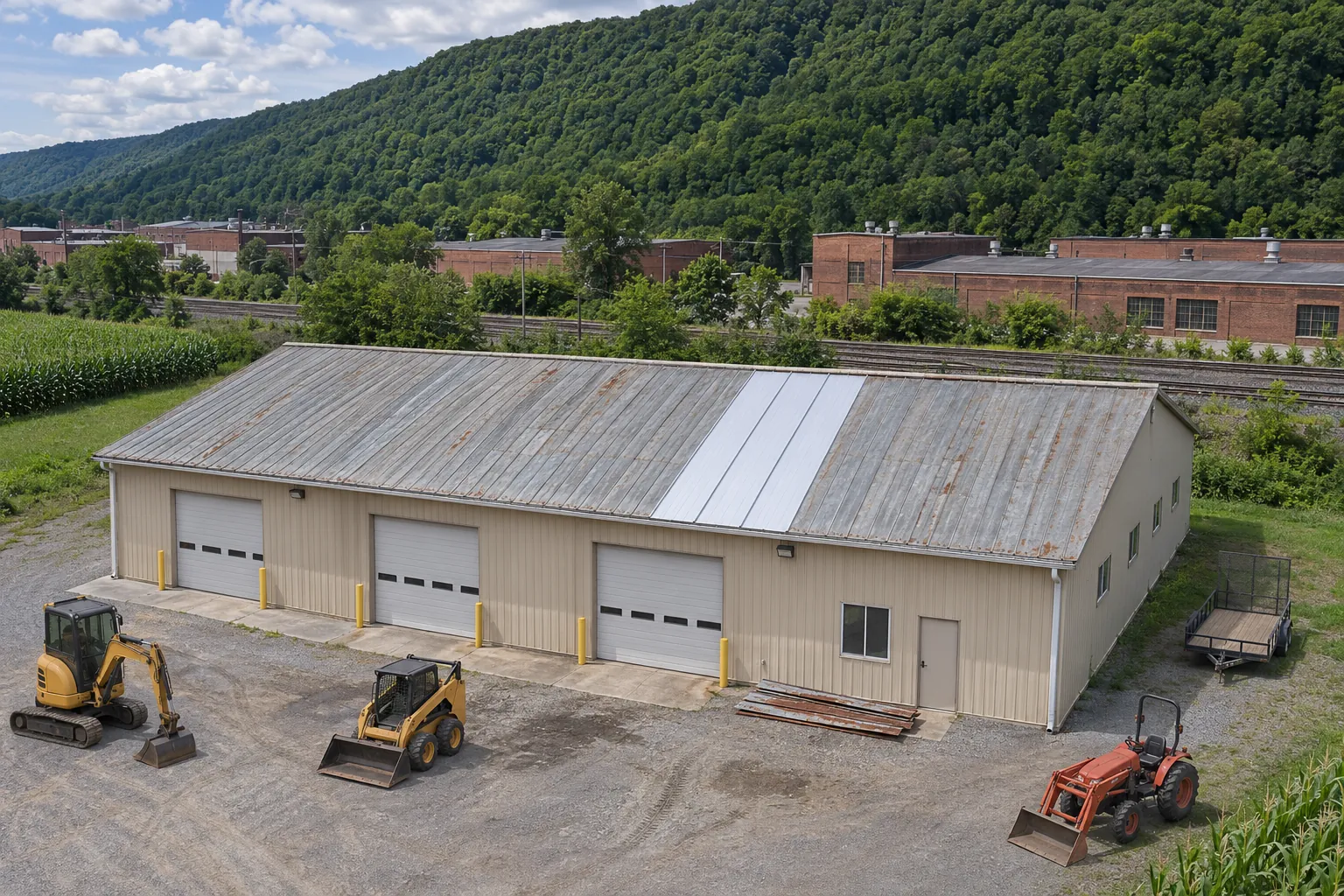
These are the conditions we trace most on Johnstown shops and warehouses that were built in stages.
Step flashing has torn as the two roofs moved by different amounts with heat and cold.
Rebuild the step flashing with material that bonds to both roofs and leaves room for movement.
The lower roof drains toward the step, and water sits against the base flashing.
Reset the slope or add a cricket at the wall, then reflash the base where standing water reached it.
Aged laps on the original roof have opened while the addition stays tight.
Probe and repair the old laps out to dry membrane, using material compatible with the older system.
Trim and screws where metal panels end at the older roof have loosened.
Refasten or replace the trim and seal the panel ends into the flashing at the transition.
Snow sliding off the taller section piles onto the lower roof and freezes at its gutter.
Check the lower edge, gutter, and laps under the drift line, then repair the openings meltwater reached.
A joint repair often keeps both roofs in service. This is how it compares with replacing one of the sections.
| Roof Factor | Repairing the Transition | Replacing One Section |
|---|---|---|
| Where water enters | At the step, wall, or joint flashing | Across the field of the older roof |
| Older roof condition | Laps hold beyond the joint | Brittle or wet through most of the section |
| Addition roof | Tight and draining | Tied into a replacement plan |
| Building use | Work near the joint only | A full section closed for the job |
| Record | Photos of the transition before and after | Plan for the new section |
Four details we check on every Johnstown building with more than one roof section.
Knowing the age and type of each section tells us which membrane or panel the repair has to bond to.
Water heading toward the step needs a path past it, so drains and slope on both sides get checked.
Sealant and patches from past visits can hide the real gap, so they come off before the new flashing.
A taller wall can let water in above the flashing, and its joints get inspected along with the roof.
Wind piles snow against the taller wall, and the melt runs straight into the joint flashing below it.
Where a metal addition ends on a membrane roof, trim, screws, and sealant all need to line up.
Joints between roof sections leak in ways a surface patch rarely fixes. Call us to trace it and rebuild the transition.
The work order for a Johnstown building with two roof sections.
We identify the membrane or panel on each side of the step and note any earlier flashing at the joint.
Stains inside get matched to the transition, the wall above it, and the drains on each roof.
Your scope shows how far the repair reaches into each section and why, based on moisture and material condition.
New flashing goes in with room for movement, adhered to both roofs with compatible material.
Following the next storm we look at the joint and the ceiling below it and add the result to your record.
Besides Johnstown we take roof repair work in these towns. Somewhere else? Call us or send us a message.
Railcar shops, grocery warehouses, and church halls.
Commercial roof repair in AltoonaAnswers for Johnstown owners about joints, cost, and booking a repair.
Yes, when the materials on both sides can take a lasting connection. We inspect the height change, drainage, and past flashing to find where water enters. The repair often extends into one section or both, so it follows the damage instead of the age line.
Cost depends on how much flashing the transition needs, whether wet insulation sits beside it, the two roof systems involved, and access to the step. We price after tracing the leak and cutting cores near the joint.
Yes. Metal additions beside older membrane roofs are common, and the panel ends, trim, and screws at the joint need their own repair along with the membrane flashing.
Call us with the building address and where water shows. We work in Johnstown and set the inspection around access to the roof and the rooms below.
Snow drifts against a taller wall and melts into the step, and freezing nights open any gap in the flashing. Those conditions reach parts of the joint that summer rain runs past.
Check the paperwork for the newer section first, since some systems require approved materials at their edges. We note the system on each side and use compatible material at the joint, and you can share the scope with the warranty holder before work starts.
Tell us where the two roofs meet and where the water lands. Call (814) 679-7746 or request an estimate.